






INDICATIONS & IMPORTANT SAFETY INFORMATION
INDICATIONS
IMPORTANT SAFETY INFORMATION
INDICATIONS
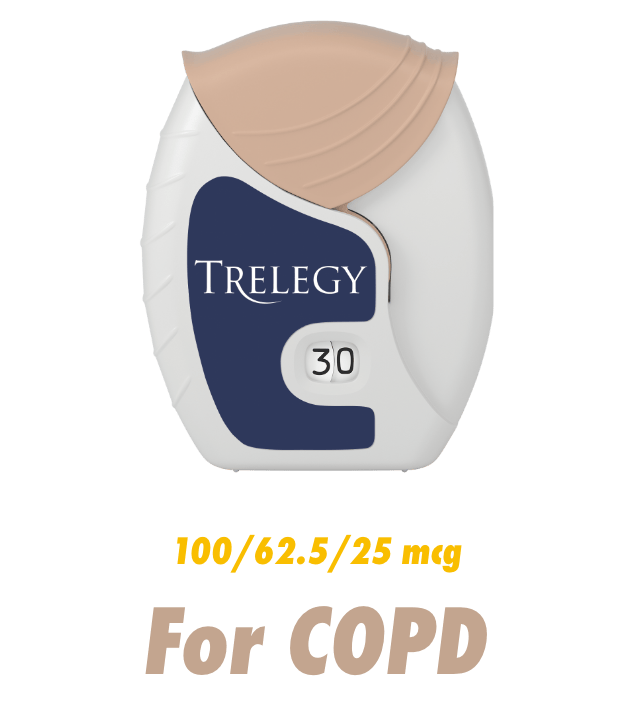
- COPD: TRELEGY 100/62.5/25 is for maintenance treatment of patients with chronic obstructive pulmonary disease (COPD).
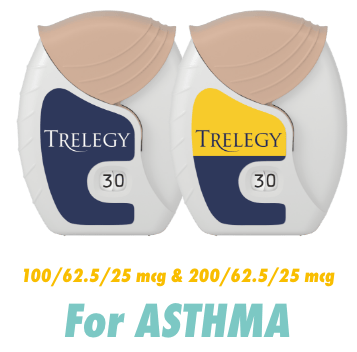
- Asthma: TRELEGY is for maintenance treatment of adults with asthma.
Limitations of Use: TRELEGY is NOT for the relief of acute bronchospasm.
IMPORTANT SAFETY INFORMATION
CONTRAINDICATIONS
TRELEGY is contraindicated in the following:
- Primary treatment of status asthmaticus or other acute episodes of COPD or asthma where intensive measures are required.
- Patients with severe hypersensitivity to milk proteins or demonstrated hypersensitivity to fluticasone furoate (FF), umeclidinium (UMEC), vilanterol (VI), or any of the excipients.
WARNINGS AND PRECAUTIONS
- Long-acting beta2-adrenergic agonist (LABA) monotherapy for asthma increases the risk of asthma-related death, and in pediatric and adolescent patients, available data also suggest an increased risk of asthma-related hospitalization. These findings are considered a class effect of LABA monotherapy. When LABA are used in fixed-dose combination with inhaled corticosteroids (ICS), data from large clinical trials do not show a significant increase in the risk of serious asthma-related events (hospitalizations, intubations, death) compared with ICS alone. TRELEGY is not indicated for use in pediatric patients aged 17 years and younger.
- TRELEGY should NOT be initiated in patients during rapidly deteriorating or potentially life-threatening episodes of COPD or asthma.
- TRELEGY is NOT a rescue medication and should NOT be used for the relief of acute bronchospasm or symptoms. Acute symptoms should be treated with an inhaled, short-acting beta2-agonist.
- TRELEGY should not be used more often or at higher doses than recommended or with another LABA for any reason, as an overdose may result. Clinically significant cardiovascular effects and fatalities have been reported in association with excessive use of inhaled sympathomimetic drugs, like LABA.
- Oropharyngeal candidiasis has occurred in patients treated with orally inhaled drug products containing fluticasone furoate. Advise patients to rinse their mouths with water without swallowing after inhalation.
- Lower respiratory tract infections, including pneumonia, have been reported following use of ICS, like fluticasone furoate. Physicians should remain vigilant for the possible development of pneumonia in patients with COPD, as clinical features of pneumonia and exacerbations frequently overlap.
- A more serious or even fatal course of chickenpox or measles may occur in susceptible patients using corticosteroids. ICS should be used with caution, if at all, in patients with active or quiescent tuberculosis infections of the respiratory tract; systemic fungal, bacterial, viral, or parasitic infections; or ocular herpes simplex.
- Particular care is needed for patients transferred from systemic corticosteroids to ICS because deaths due to adrenal insufficiency have occurred in patients during and after transfer. Taper patients slowly from systemic corticosteroids if transferring to TRELEGY.
- Hypercorticism and adrenal suppression may occur with higher than the recommended dosage or at the regular dosage of ICS in susceptible individuals. If such changes occur, reduce the dose of TRELEGY slowly and consider other treatments for management of COPD or asthma symptoms.
- Caution should be exercised when considering the coadministration of TRELEGY with ketoconazole and other known strong CYP3A4 inhibitors (including, but not limited to, ritonavir, clarithromycin, conivaptan, indinavir, itraconazole, lopinavir, nefazodone, nelfinavir, saquinavir, telithromycin, troleandomycin, voriconazole) because increased systemic corticosteroid and cardiovascular adverse effects may occur.
- If paradoxical bronchospasm occurs, discontinue TRELEGY and institute alternative therapy.
- Hypersensitivity reactions such as anaphylaxis, angioedema, rash, and urticaria may occur after administration of TRELEGY. Discontinue TRELEGY if such reactions occur.
- Vilanterol can produce clinically significant cardiovascular effects in some patients as measured by increases in pulse rate, systolic or diastolic blood pressure, and also cardiac arrhythmias, such as supraventricular tachycardia and extrasystoles. If such effects occur, TRELEGY may need to be discontinued. TRELEGY should be used with caution in patients with cardiovascular disorders, especially coronary insufficiency, cardiac arrhythmias, and hypertension.
- Decreases in bone mineral density have been observed with long‐term administration of products containing ICS. Patients with major risk factors for decreased bone mineral content, such as prolonged immobilization, family history of osteoporosis, postmenopausal status, tobacco use, advanced age, poor nutrition, or chronic use of drugs that can reduce bone mass (eg, anticonvulsants, oral corticosteroids) should be monitored and treated with established standards of care prior to initiating TRELEGY and periodically thereafter.
- Glaucoma, increased intraocular pressure, and cataracts have been reported following the long‐term administration of ICS or inhaled anticholinergics. Consider referral to an ophthalmologist in patients who develop ocular symptoms or use TRELEGY long term.
- Use with caution in patients with narrow-angle glaucoma. Instruct patients to contact a healthcare provider immediately if signs or symptoms of acute narrow-angle glaucoma develop.
- Use with caution in patients with urinary retention, especially in patients with prostatic hyperplasia or bladder-neck obstruction. Instruct patients to contact a healthcare provider immediately if signs or symptoms of urinary retention develop.
- Use with caution in patients with convulsive disorders, thyrotoxicosis, diabetes mellitus, and ketoacidosis, and in patients who are unusually responsive to sympathomimetic amines.
- Be alert to hypokalemia and hyperglycemia.
- Orally inhaled corticosteroids may reduce growth velocity in children and adolescents.
ADVERSE REACTIONS: TRELEGY 100/62.5/25 MCG FOR COPD
- In subjects with COPD, the most common adverse reactions (≥1% and more common than placebo + FF/VI) reported in two 12-week clinical trials with UMEC + FF/VI, the components of TRELEGY, (and placebo + FF/VI) were: headache, 4% (3%); back pain, 4% (2%); dysgeusia, 2% (<1%); diarrhea, 2% (<1%); cough, 1% (<1%); oropharyngeal pain, 1% (0%); and gastroenteritis, 1% (0%).
- Additional adverse reactions (≥1% incidence) reported in subjects with COPD taking TRELEGY in a 52-week trial included upper respiratory tract infection, pneumonia, bronchitis, oral candidiasis, arthralgia, influenza, sinusitis, pharyngitis, rhinitis, constipation, urinary tract infection, and dysphonia.
ADVERSE REACTIONS: TRELEGY FOR ASTHMA
- In subjects with asthma, the most common adverse reactions (≥2% incidence with TRELEGY) reported in a 24-week to 52-week clinical trial with:
- TRELEGY 100/62.5/25 mcg (or FF/VI 100/25 mcg) were: pharyngitis/nasopharyngitis, 17% (16%); headache, 9% (7%); upper respiratory tract infection/viral upper respiratory tract infection, 5% (7%); respiratory tract infection/viral respiratory tract infection, 4% (4%); bronchitis, 4% (3%); influenza, 4% (3%); back pain, 3% (4%); sinusitis/acute sinusitis, 2% (3%); rhinitis, 2% (3%).
- TRELEGY 200/62.5/25 mcg (or FF/VI 200/25 mcg) were: pharyngitis/nasopharyngitis, 15% (16%); upper respiratory tract infection/viral upper respiratory tract infection, 7% (6%); headache, 5% (6%); bronchitis, 5% (5%); sinusitis/acute sinusitis, 3% (2%); respiratory tract infection/viral respiratory tract infection, 3% (2%); back pain, 2% (1%); urinary tract infection, 2% (<1%).
DRUG INTERACTIONS
- TRELEGY should be administered with extreme caution to patients being treated with monoamine oxidase inhibitors, tricyclic antidepressants, or drugs known to prolong the QTc interval, or within 2 weeks of discontinuation of such agents, because they may potentiate the effect of vilanterol on the cardiovascular system.
- Use beta‐blockers with caution, as they not only block the pulmonary effect of beta‐agonists, such as vilanterol, but may produce severe bronchospasm in patients with COPD or asthma.
- Use with caution in patients taking non–potassium-sparing diuretics, as ECG changes and/or hypokalemia associated with these diuretics may worsen with concomitant beta-agonists.
- Avoid coadministration of TRELEGY with other anticholinergic-containing drugs, as this may lead to an increase in anticholinergic adverse effects.
USE IN SPECIFIC POPULATIONS
- TRELEGY is not indicated for use in children and adolescents. The safety and efficacy in pediatric patients (aged 17 years and younger) have not been established.
- Use TRELEGY with caution in patients with moderate or severe hepatic impairment, as fluticasone furoate systemic exposure may increase by up to 3-fold. Monitor for corticosteroid-related side effects.
Please see full Prescribing Information, including Patient Information, for TRELEGY.